
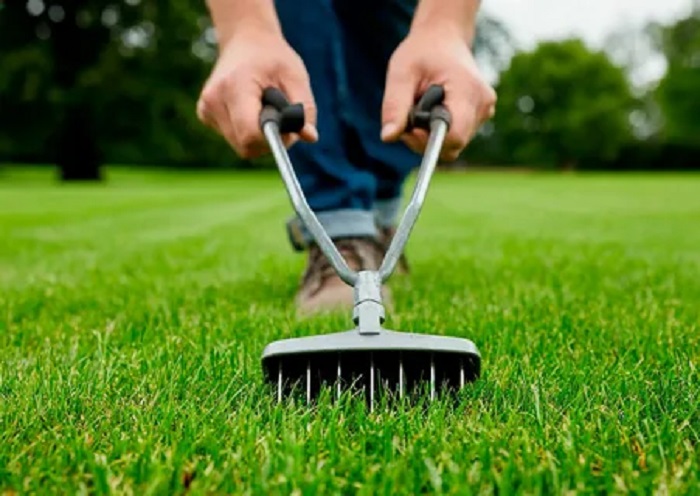
A well-groomed lawn is not only a smooth green carpet, but also a system where soil, water, light and regular actions are important. Proper care reduces the risk of bald spots, moss and weeds, and also makes the grass more resistant to heat, trampling and disease.
In order for the lawn to look dense and healthy, it is important to follow the seasonal rhythm: in the spring – restoration and nutrition, in the summer – maintenance and protection from stress, in the fall – strengthening the roots and preparing for the cold. Below are practical steps and tips to help keep your lawn in great shape.
Lawn problems and how to prevent them
Weeds appear more often where the grass is weakened: in the shade, on depleted or compacted soil, and with irregular mowing. Maintain grass density – this is the best prevention. Reseed bald spots in a timely manner, otherwise the voids will quickly be occupied by unwanted plants.
Pests and diseases
Spotted yellowing, “bald” circles, signs of root gnawing, or insect activity may indicate pests. Inspect your lawn regularly, especially during the warm season, and eliminate the causes of stress: overwatering, overdrying, excess nitrogen, cutting too short. If the problem persists, a specialized treatment such as tampa lawn pest control may be required.
Brief checklist for the week
Bottom line: stable care is a combination of proper haircuts, proper watering, timely fertilizing and working with the soil. By following these rules, you will get a dense, stable and beautiful lawn that can more easily withstand heat, stress and seasonal changes.
Results: how to keep your lawn healthy all year round
Lawn care is easiest to build as a system: focus on the season, weather and condition of the grass, and not on a “universal schedule”. Then mowing, watering and fertilizing work together and produce dense, even turf without bald spots.
The main rule is to act in a timely manner and in moderation: do not cut too low, do not overwater, do not overfeed, and do not try to “treat” the lawn in one go. Regular diagnostics based on external signs helps to quickly adjust care and prevent most problems.
Short checklist for each season
- Spring: combing, light aeration, overseeding in rare places, starting feeding, careful cutting regime.
- Summer: stable cutting height, deep watering as needed, control of compaction and weeds, gentle recovery after stress.
- Autumn: preparation for winter – final fertilizing, removal of leaves, aeration and leveling if necessary, final correct haircut.
- Winter: minimize trampling and formation of ice crust, avoid storing snow with reagents.
Memo on the condition of the grass: if the lawn turns pale, check the nutrition and watering schedule; if moss and sparseness appear, look for the reason in the shade, acidity and compaction; if bald spots form, help with overseeding and temporarily reduce the load. Regularity, observation and adjustments after the fact are the basis of a beautiful lawn.